After the test
Running a penetration test lessons learned review
A penetration test lessons learned review happens after the fixes and the retest. It asks what the engagement taught the organization, beyond the findings themselves. So the next test starts better prepared, and the same gaps do not return.
- Signed written scope first
- Senior ethical hackers only
- Your NDA signed as standard
Why a penetration test lessons learned review matters
Fixing findings closes today's gaps. However, it does not explain why they appeared. If the same kind of issue returns next year, the process that created it is still in place.
So the review looks at causes and at the engagement itself. Both feed the next scope and the next budget.
Who attends the penetration test lessons learned review
Keep the group small. The security lead, the owners of the affected systems and the person who managed procurement are usually enough. Then add the tester's written notes from the debrief.
Also invite someone who can change policy. Because some causes are organizational, an engineer alone cannot fix them.
| Role | What they bring |
|---|---|
| Security lead | The overall picture and priorities |
| System owners | Why each issue existed |
| Procurement | What worked in the buying process |
| Policy owner | Authority to change standards |
Penetration test lessons learned agenda
Tick each item your review will cover.
Your result appears here as you tick, so you can see what is still open.
Questions to ask about the engagement
Did the scope cover what mattered? Were contacts reachable during testing? Did the report arrive on time and in a usable form? Each answer improves the next engagement.
In addition, ask how long fixes took, and why. Delays often point to unclear ownership rather than hard technical work.
Questions to ask about causes
Group findings by cause rather than by system. For example, several issues may share one missing review step. Then one process change prevents a whole family of problems.
Similarly, note which issues were found before the test by your own team. That shows where internal checks already work.
Recording penetration test lessons learned
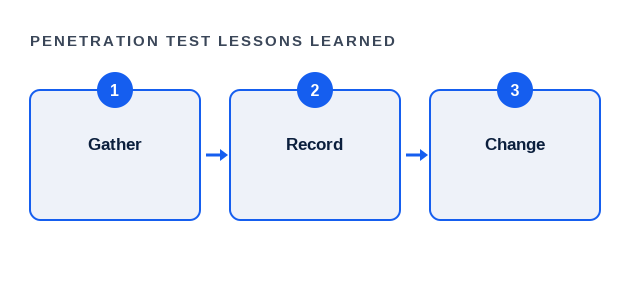
Write the outcome on one page: what changed, who owns each change and by when. Then file it with the report and the retest letter.
Next year, read that page before scoping. As a result, the new test can check whether the changes held.
What we provide for the review
The ethical hacker who ran the test writes the report and briefs you directly. That written debrief gives your review a clear starting point, and nothing is retained on our side afterwards.
Full engagements usually land between $35,000 and $120,000, with a floor of $25,000. The bounded External Exposure Review starts at $4,500, and its fee is credited in full against a full engagement commissioned within ninety days. Every fee is fixed after a written scope, so there is no hourly billing. The method follows the Penetration Testing Execution Standard.
Penetration test lessons learned questions
When should the penetration test lessons learned review happen?
After the retest, while the engagement is still fresh.
How long should a penetration test lessons learned review take?
Usually one short meeting, with a one-page written outcome.
Does the testing firm attend?
Its written debrief is enough in most cases.
Where do penetration test lessons learned go?
Into the vendor file, and into next year's scope.
Related guides
Feed penetration test lessons learned into the next scope
Send last year's scope and your review notes. We reply with a written scope and a fixed fee.
Request a written scope