Engagement note
When a penetration test second opinion is worth it
A penetration test second opinion means asking a different firm to test the same estate. It is not a sign of distrust. Instead, it is a check that the first scope and report gave you the assurance you paid for.
- Signed written scope first
- Senior ethical hackers only
- Your NDA signed as standard
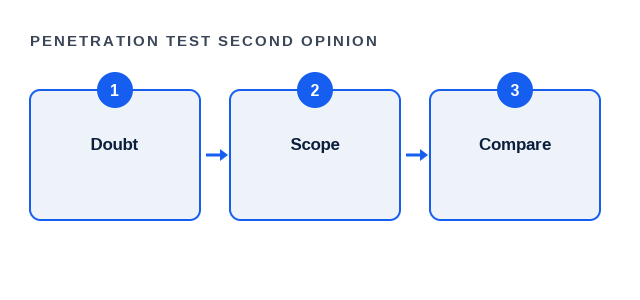
When to seek a penetration test second opinion
The usual trigger is a report that looks thin. For example, it lists many generic items but no chains, or it finds almost nothing in a large estate. Another trigger is a scope that left out systems your customers care about.
Also consider one before a major event, such as a funding round or a large customer contract. Because the stakes are higher, the cost of a second view is small by comparison.
What to share with the second firm
Share the scope of the first test, so the new firm can see what was covered. However, think carefully before sharing the findings themselves.
If the goal is an independent view, a clean start is better. So give the scope and the questions, then let the second firm test without the first answers.
| Share | Why |
|---|---|
| Previous scope | Shows what was covered and what was not |
| Your questions | Keeps the new work focused |
| Fix status | Avoids paying to find known issues |
| Findings, if any | Only if you want confirmation, not independence |
Penetration test second opinion triggers
Tick what applies to your last report.
Your result appears here as you tick, so you can see what is still open.
Scoping a penetration test second opinion
Write the goal in one sentence. Is it to confirm the first findings, to cover what was missed, or to test the same scope fresh? Each goal leads to a different scope and fee.
Then sign the authorization as you would for any test. The system owner approves the scope in writing before anything starts.
Comparing the two reports
Put the reports side by side. Look at depth, at chains and at how clearly each fix is explained. Similarly, note what each firm said was out of scope.
A gap is not proof that the first firm failed. However, an important finding in scope that only one firm reported deserves a written answer.
Handling the first firm after a penetration test second opinion
Share the outcome calmly and in writing. Many firms will review a missed item and explain it. As a result, you learn whether the gap was scope, time or method.
Then decide whether to keep, rotate or replace the firm. Because the evidence is written, the decision is easy to defend.
Our approach
We scope every engagement in writing, and a named senior ethical hacker leads the work and writes the report. A complimentary retest follows once your fixes are in.
Full engagements usually land between $35,000 and $120,000, with a floor of $25,000. The bounded External Exposure Review starts at $4,500, and its fee is credited in full against a full engagement commissioned within ninety days. Every fee is fixed after a written scope, so there is no hourly billing. The method follows the Penetration Testing Execution Standard.
Penetration test second opinion questions
Is a penetration test second opinion common?
Yes, especially before funding rounds or large contracts.
Should the second firm see the first report?
Only if you want confirmation. For independence, share the scope instead.
Does a penetration test second opinion need new authorization?
Yes. The owner signs a new written scope first.
What if the two reports disagree?
Ask the first firm to explain any in-scope gap in writing.
Related guides
Scope a penetration test second opinion
Send the previous scope and your questions. We reply with a written scope and a fixed fee.
Request a written scope